

Consequences of Fitch’s Decision on the Economy
The decision of the rating agency Fitch to alter Romania’s country outlook has sparked numerous discussions in the economic and financial environment. The impact of this decision is felt across various sectors, affecting both the government’s financing costs and investor confidence. A negative outlook may lead to an increase in the interest rates at which Romania borrows on external markets, potentially placing additional pressure on the state budget. Moreover, this decision could affect the perception of foreign investors, causing them to be more cautious regarding investments in the Romanian economy.
In the short term, the leu may experience a depreciation against major currencies due to the uncertainty surrounding the national economy. This could result in higher prices for imported goods, thereby contributing to increased inflation. Simultaneously, companies reliant on external financing might face challenges in securing loans at favorable costs, which could slow down investments and, by extension, economic growth.
In the medium and long term, the effects of Fitch’s decision will largely depend on the response of Romanian authorities and the measures they implement to restore confidence in the country’s economy. Fiscal and structural reforms could help improve the economic outlook and regain investor trust. However, the absence of concrete measures could perpetuate uncertainty and lead to further downgrades of the country rating in the future.
Reaction of the Minister of Finance
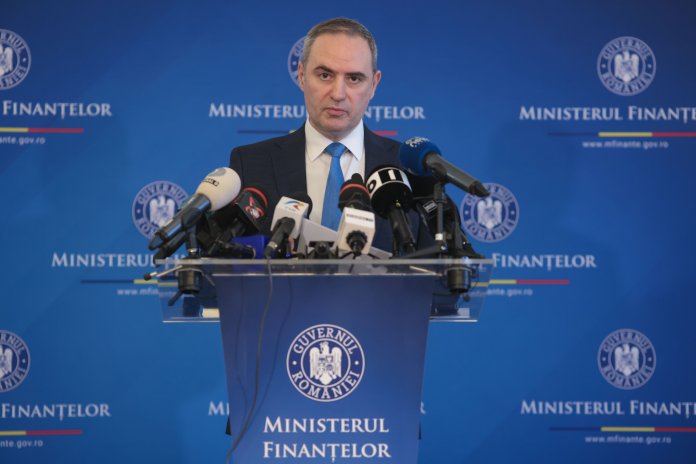
The Minister of Finance reacted swiftly to Fitch’s decision, emphasizing that it serves as a wake-up call for Romania’s economic policy. He stated that while the negative assessment was not unexpected, it is crucial for the government to take the agency’s recommendations and observations seriously. The Minister highlighted that ensuring the country’s economic stability is a priority and that measures will be taken to counteract the negative effects of this decision.
In his speech, the Minister stressed the importance of maintaining a controlled budget deficit and a sustainable public debt. He mentioned that the government is determined to implement necessary structural reforms aimed at enhancing the efficiency of public finance management and stimulating economic growth. At the same time, the Minister underscored that dialogue with international partners and rating agencies will continue, with the objective of restoring a positive economic outlook.
The Minister acknowledged that there are significant challenges facing the Romanian economy but expressed confidence in the government’s ability to overcome these difficulties through a well-founded set of measures. He called for cooperation among all economic and political actors to ensure Romania’s long-term stability and prosperity.
Sensitive Aspects of the Report
The sensitive aspects of the Fitch report were highlighted by the Minister of Finance, who pointed out critical issues raised by the rating agency. One of the most significant concerns mentioned is the budget deficit, which continues to be a major challenge for Romania. The agency highlighted the risk that the deficit could exceed sustainable levels, which could lead to a deterioration of macroeconomic stability.
Another sensitive point raised is the level of public debt, which, although still manageable, could become problematic in the absence of fiscal consolidation measures. Fitch noted the necessity for structural reforms that support sustainable economic growth and enhance public spending efficiency. Furthermore, the report emphasized the importance of political stability and a predictable legislative environment, which are essential elements for maintaining investor confidence and attracting new foreign investments.
The Minister recognized that additional efforts are needed to address these issues and emphasized that the government is working on a plan of measures that directly respond to these challenges. He highlighted that dialogue with Fitch and other rating agencies will continue to ensure transparent communication and demonstrate Romania’s commitment to implementing necessary reforms. In this context, the Minister called for close collaboration among all state institutions and the business environment to overcome the obstacles identified in the report and ensure a positive economic trajectory.
Future Measures and Economic Strategies
In light of the economic challenges highlighted by the Fitch report, the Romanian government is planning a series of measures and strategies aimed at stabilizing the economy and improving growth prospects. Among the announced priorities are the implementation of fiscal reforms that enhance revenue collection efficiency and optimize public spending. In this regard, there is consideration for the digitalization of the fiscal system to reduce tax evasion and enhance transparency.
Additionally, the government intends to adopt fiscal consolidation measures to reduce the budget deficit and ensure sustainable management of public debt. Strategies include prioritizing investments in infrastructure and key sectors that can stimulate long-term economic growth. Such investments are expected to contribute to job creation and enhance Romania’s economic competitiveness.
Another important aspect of the governmental plan is supporting the business environment, particularly small and medium enterprises, by facilitating access to financing and reducing bureaucracy. Furthermore, the government aims to attract foreign direct investments by promoting a stable and predictable legislative framework that instills confidence in international investors.
On the international front, Romania seeks to strengthen relationships with economic partners and bolster its position within the European Union. This will involve actively participating in European economic support programs and accessing available funds for development and innovation. At the same time, there will be a strong emphasis on continuous dialogue with rating agencies and international financial institutions to ensure a clear understanding of the adopted measures and their impact on the economy.
Sursa articol / foto: https://news.google.com/home?hl=ro&gl=RO&ceid=RO%3Aro